
The team doesn’t need another report.
It needs the right practice.
A workout is not a workshop. It is the specific behavioural work, selected by the engine, most likely to remove this team’s constraint.
Every workout, scheduled and explained.
One live view tracks the milestones and the workouts prescribed for this team, why each one, what it does, and what it unlocks.
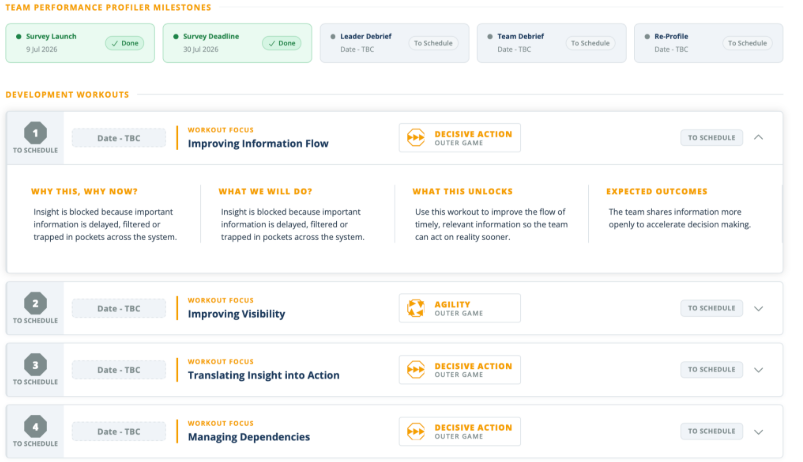
Four steps. One observable change.
Constraint
The diagnostic identifies the one behaviour limiting the team’s performance.
Prescribed Workout
The engine selects the specific 120-minute session most likely to shift it.
Real Work
The team practises on a live, consequential issue, not a hypothetical case study.
Changed Behaviour
A new rule appears in the next difficult meeting, and gets remeasured.
Five principles. No exceptions.
Prescribed
Chosen by the engine for this team’s constraint, never picked from a generic catalogue.
Focused
One pattern at a time, with enough space to practise rather than consume content.
Applied
The team works on current decisions, priorities, tensions and stakeholders.
Led In Context
Facilitated by someone who understands this team’s specific constraint, not turned into a rigid script.
Built To Transfer
Commitments and routines make the behaviour usable after the session.
Workouts are routed, not selected.
A clear chain runs from the diagnostic to the specific behaviour your team needs to shift next.
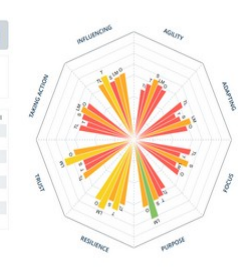
Diagnostic
Reads the team’s current behavioural pattern and identifies where performance is constrained.

Sequencing Tool
Routes the team to the most useful next piece of behavioural work, factoring in how different participant groups perceive the team, not just one rater’s view.

Workout
Creates structured practice, commitments and action against the constraint.
“The client should not experience workouts as ‘more workshop content’. They should experience a clear prescription: this is the behavioural work most likely to remove the current constraint.”
The team practises something commercially useful; they’re not out of the business for days.
The timings are intentionally tight: 120 minutes to install the team’s new operating behaviours.
Set the frame
Why this constraint, why this team, why now.
00–15 minsDrag
Strengths, friction patterns and what is usually left unsaid.
15–40 minsNew patterns
Practise new disciplines that change the pattern of behaviour.
40–70 minsBuild the rule
Convert practice into new team disciplines and standards.
70–100 minsInstall the test
Agree owner, cadence and observable evidence.
100–120 minsWhat the team leaves a workout with
The output is not more insight. It is the team’s own operating system and evidence of movement.
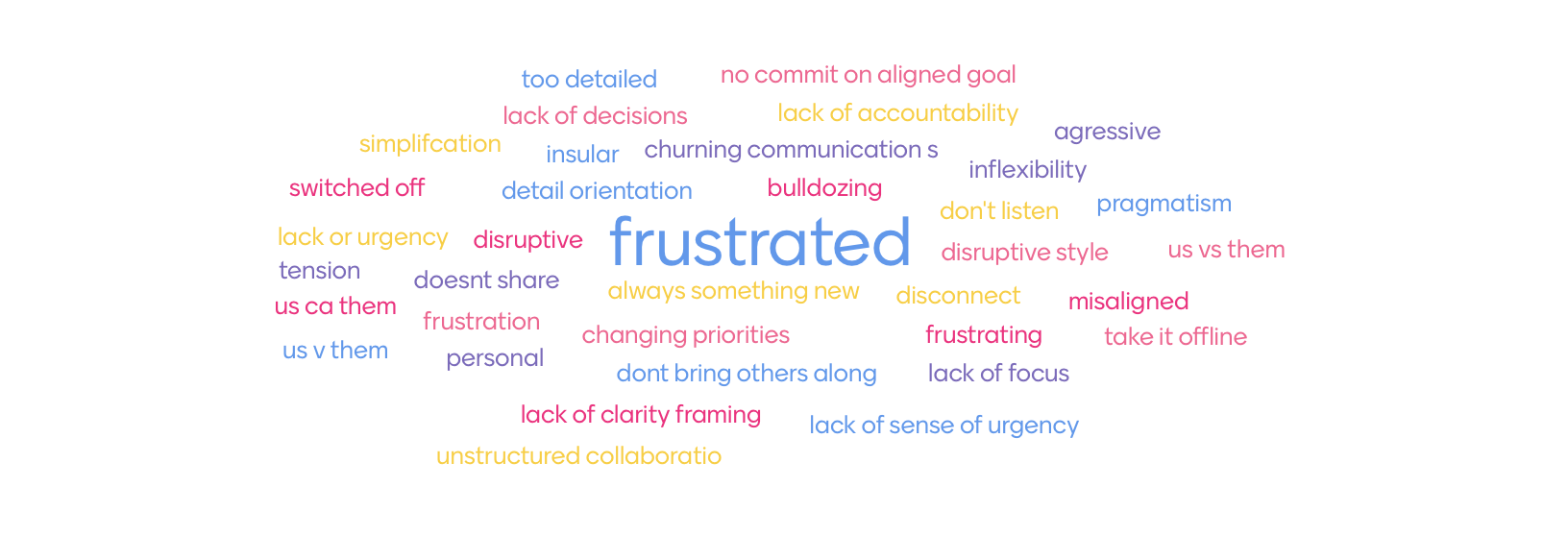
Raw signal
What the team actually said.
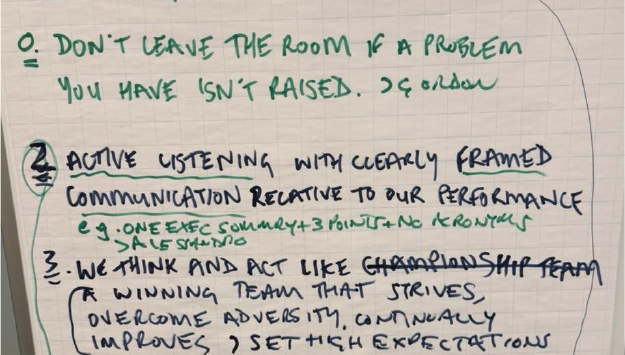
Live-room artefact
What the team created in the room.
Illustrative Operating Rules
1. Define the problem before solving it
2. Challenge ideas, not commitment
3. Do not leave the room with unclear ownership
Installed discipline
The rule, permission and 30-day test.
A workout has worked only when the new behaviour appears in the next difficult situation.
Before
- Issues avoided
- Decisions drift
- Ownership unclear
- Dependencies break
After
- Issues surfaced
- Decisions made
- Ownership clear
- Dependencies managed